From raw logs to reason collection, automatically
Just upload the raw file and work-hour calculation, anomaly detection, and leave/field-work reconciliation all run automatically, leaving only the exceptions for a person to review.
Upload raw logs
Upload the fingerprint-reader access log file.
Calculate work hours
Auto-derive actual hours from first-in and last-out.
Detect anomalies
Automatically find lateness, under-hours, missing punches.
Reconcile leave/field work
Auto-verify with filings and the calendar.
Reasons & report
Collect reasons via Slack + a leader report.
Messy access logs into a work-hours sheet
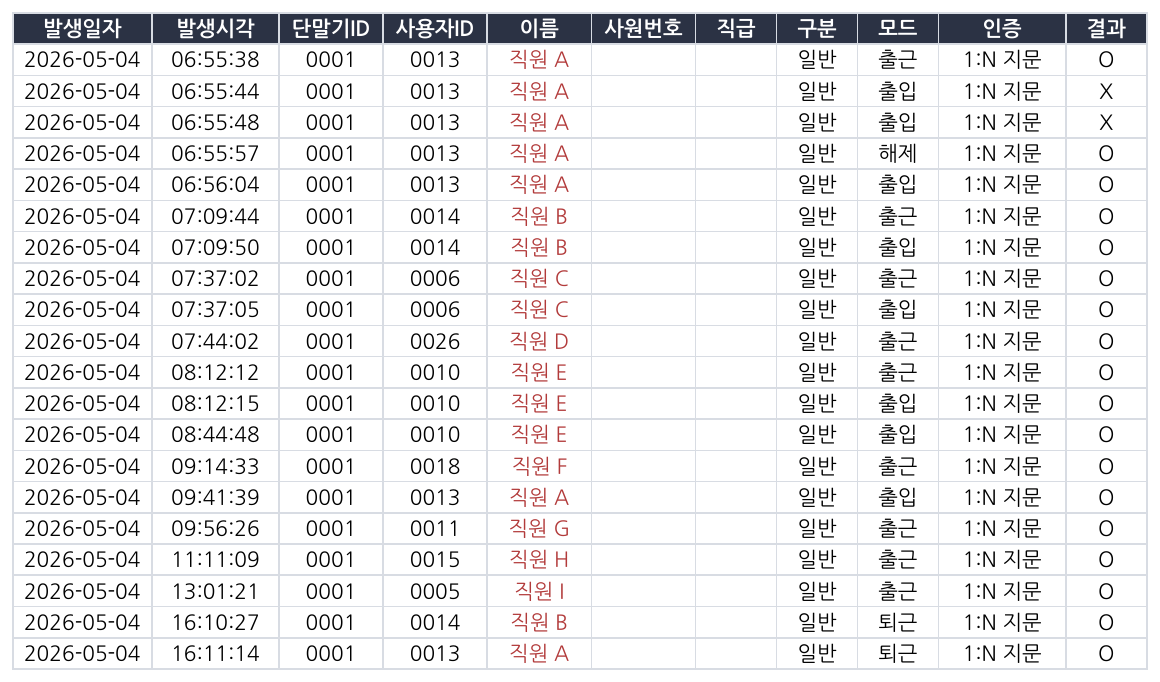
Just upload the raw fingerprint-reader file, and it picks each employee's first "check-in" and last "check-out" for the day and calculates actual work hours (including a lunch deduction) automatically.
- Automatically strips out noise like repeated access/release punches
- Overnight work past midnight is correctly attributed to the prior day
- The monthly manual cleanup and calculation disappears
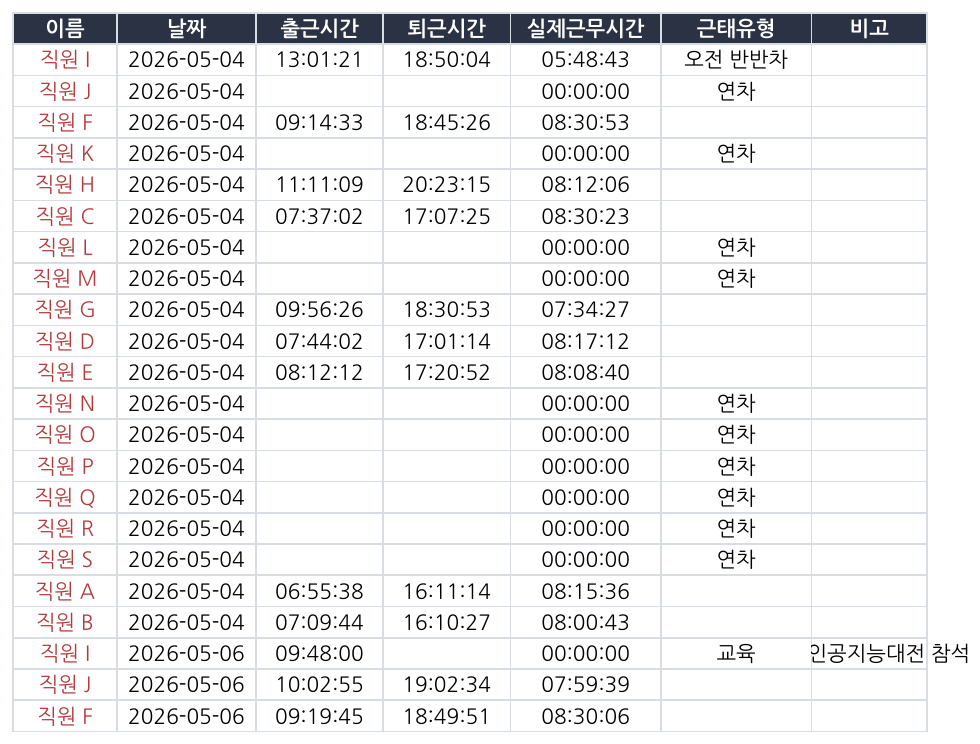
Work hours and attendance types judged automatically
It organizes each employee's check-in, check-out, and actual hours, and automatically labels attendance types like annual leave, half-half day, and training. Anomalies such as lateness, under-hours, and missing punches are found automatically and surfaced to an exceptions inbox for a person to handle.
- The admin focuses only on filtered exceptions, not the whole set
- The lateness tolerance (e.g. 20 min) is adjustable on screen — marginal cases auto-close
- Click an exception and the check-in/out evidence appears right away
Reconciles leave and field work on its own to auto-resolve
If a day flagged as an anomaly is actually leave, remote work, field work, or training, the system finds the evidence and organizes it automatically. When confident it applies the result automatically; when unsure it escalates for a person to decide.
- Reads leave/remote-work filings (from the drive) to auto-resolve that day's anomaly
- For field work/training it judges from calendar events — if unclear, marked "pending approval"
- Special arrangements like reduced hours for childcare are applied based on the approved filing
Asks for reasons via Slack, reports to leaders
When an attendance anomaly occurs, a bot asks the employee for the reason in a 1:1 message, and once they reply it's reflected in the inbox automatically. Leaders get a summary dashboard on a regular cadence.
- Reasons are collected automatically, without the admin asking each time
- Follows up automatically when there's no response
- A leader summary and per-person detail are sent as images to Slack every two weeks
So instead of a plain timesheet, we made it gather the reasons behind anomalies automatically, so leaders can see the context.